April 3, 2026 – by Courtney Smith
If you’ve started pricing out your wedding bar and had a minor panic attack, you’re not alone. Wedding bar costs have climbed steadily over the last several years, and in 2026, rising energy prices are accelerating that trend faster than most couples expect.
Here’s what’s actually happening: energy costs affect nearly every line item in your wedding budget — transportation, refrigeration, glassware production, mixer manufacturing, and wholesale distribution. As the global economy continues to fragment into competing supply chains, those costs are being passed downstream. To you. The couple planning a wedding in 2026.
I’m Courtney, owner of Chesapeake Bartenders & Events, a professional mobile bartending company serving Maryland, DC, Delaware, and Virginia. My company has bartended over 150 weddings in the last 5 years, so I’ve seen every attempt couples make to save on their bar…the ones that work, and the ones that quietly backfire.
Here is what actually moves the needle in 2026.
1. The Single Biggest Lever: Reduce Your Guest Count
If there is one thing I want every couple reading this to take away, it’s this: nothing reduces your wedding bar cost more dramatically than reducing your guest count. Nothing.
Food and beverage, including both alcoholic and non-alcoholic are the most elastic costs in your entire wedding budget. Every head you remove from the guest list removes a proportional cost from your bar. Glassware or cups, cocktail napkins, ice, mixers, garnishes, alcohol — all of it scales with headcount.
The CBE Difference
We don’t lock couples into a contract guest count and hold them to it no matter what. When your final headcount drops from 125 to 90, we adjust every flexible line item accordingly. Glassware, ice, garnishes, mixers, alcohol… all scaled down to reflect where you actually landed. That’s an instant cost reduction with zero negotiation required.
At CBE, we don’t lock our couples into a contract number and hold them to it no matter what. When you sign with us, we check in with you throughout the planning process. Once we receive your final guest count, we adjust every per-person line item accordingly. Guest count drops from 125 to 90? That’s an immediate, real reduction in your bar cost. We build that flexibility in intentionally because the planning process is rarely a straight line. Ask your wedding bar team if they can do the same.
This is especially relevant in 2026. If you’re on the fence about trimming your guest list, the math is simple: fewer guests = lower bar cost, lower catering cost, lower rental cost, lower venue cost. It compounds.
2. Stop Treating Your Vendors Like Amazon Prime
One of the least-talked-about ways to save money on your wedding bar is also one of the most actionable: be a proactive client.
We can pass significant cost savings along to couples who plan ahead, and here’s a recent, concrete example. Earlier this year, we waived travel and delivery fees for 2026 wedding couples who paid 50% of their balance early. Why? Because we saw what was happening with oil prices and supply chain disruptions in the Middle East, purchased a large wholesale order of supplies (Tossware, cocktail napkins, straws, and more) at a locked-in cost, and could pass those savings directly to clients who participated.
2026 Cost Watch
Rising energy prices are directly affecting the cost of mixers, glassware production, refrigeration, and wholesale distribution in 2026. Last-minute orders mean retail prices… and retail prices mean your bar bill goes up. Every week of advanced planning has real dollar value right now.
That opportunity only existed because of advance planning. Couples who wait until the last minute — changing their menu, adding guests, requesting specialty items two weeks out, etc., eliminates our ability to buy wholesale. When we’re placing a last-minute order, we’re paying retail. That cost gets passed to you.
How do you avoid this? Fill out the questionnaires your wedding vendors send you. Respond to check-in emails. Communicate. We send planning questionnaires at signing and throughout the process specifically so we can plan well in advance, catch potential cost issues early, and build in pivoting room when something unexpected changes.
Wedding vendors in 2026 are not sitting behind a desk waiting for your call. We are managing insurance, coordinating staff, doing site visits, running payroll, handling marketing, generating proposals, and setting up and breaking down multiple events per week. When you go into high-maintenance mode two weeks before your wedding with last-minute changes, that urgency has a cost. Plan ahead, be a great client, and you will have less stress and a lower bill.
3. Understand What “Beer and Wine Only” Actually Saves (And What It Doesn’t)
Yes, offering beer and wine only instead of a full open bar is a real cost-saving strategy. Spirits cost more per ounce, and once you add mixers, juices, and garnishes for a full cocktail menu, the costs add up quickly.
But here’s what I get asked constantly: “If we do beer, wine, and one signature drink, will that save us money?”
The honest answer is: sometimes. Here’s why.
The real cost of your wedding bar is built around per-person consumption of everything, not just alcohol. If your signature drink includes fresh juice, simple syrup, cherries, and specialty garnishes, the ingredient cost starts to look a lot like a full bar. A mixer is a mixer. Whether it’s sprite, simple syrup, or margarita mix, the cost is calculated by ounce consumed.
And then there’s the follow-up I always ask: “Half my guests don’t drink alcohol, so my bar cost should be lower, right?”
My response: Do those guests plan to drink water, lemonade, soda, or mocktails? If yes, your non-alcoholic beverage cost does not decrease, it can actually increase. I’ve bartended weddings where the non-drinking guests consumed enormous quantities of soda, all while using cups, napkins, and ice. Non-alcoholic beverages are not free. Soda is not as cheap as you think.
One cost-effective solution for non-drinking guests: instead of routing everyone through the bar for sodas, set up a beautiful hydration station. Think spa water — a large dispenser with plain water, one with citrus and mint, one with berries. Use 9 oz plastic cups and plain cocktail napkins. You can add lemonade or iced tea. This keeps non-drinkers happy without running up your bar tab.
Pro Tip from CBE
Our default cup size is 9 oz. Guests who receive larger cups unconsciously consume more… which means more ice, more mixer, more garnish on every single drink. That one swap alone can reduce your per-person consumption noticeably across 100+ guests.
4. The Orange Crush Problem — and What It Taught Us About Pivoting
Maryland couples love the Orange Crush. It’s our state’s signature cocktail. And for years, it’s also been one of the first things I walk couples back from when they’re working with a tight budget.
Why? Fresh squeezed orange juice (the key ingredient in a proper Orange Crush), has increased dramatically in price over the last five years. Ordering it in quantity for a wedding bar can mean hundreds of dollars in juice alone (yes, even if you purchase it at Sam’s Club)
Rather than just saying “don’t do it,” we built solutions:
- Pivot the cocktail entirely. A Grapefruit Crush or Margarita Crush delivers the same festive energy without the OJ price tag.
- The Orange Blossom Crush. We created a unique variation using orange vodka, orange blossom simple syrup, Sprite, Fanta orange soda, and just a splash of pasteurized orange juice. It photographs beautifully, tastes great, and costs significantly less than a traditional Crush.
- Pasteurized juice substitution. Swapping fresh-squeezed OJ for pasteurized OJ on a classic Orange Crush reduces ingredient cost by roughly 30%. That’s meaningful savings!
The lesson here goes beyond orange juice. In 2026, with energy and commodity costs rising, the vendors who’ve learned to pivot quickly, without sacrificing quality…are the ones who can protect your budget. That’s only possible when there’s enough lead time to find creative alternatives. Which brings us back to point two: plan ahead!
5. Two-Liter Bottles Are Your Secret Weapon
Pinterest lied to you.
Those stunning wedding bar photos with individual glass bottles of Fever Tree tonic and hand-labeled artisan mixers? They were taken before the reception started, before anyone touched anything, and before 150 guests consumed 400 drinks over four hours.
The most underrated cost-saving move in wedding bar planning is also the least glamorous: 2-liter bottles.
Swapping premium canned or bottled mixers for 2-liter bottles of club soda, tonic, ginger ale, Coke, and Diet Coke saves you an enormous amount per ounce, often 2-3x less expensive than individual cans. Do cans look nicer? Yes. Is the difference worth it when it adds hundreds of dollars to your bar cost? Almost never.
Use the money you save on mixers to invest somewhere guests will actually notice! Perhaps a prettier bar setup, a signature cocktail display, or better alcohol.
6. Sangria: The Underrated Budget Hero
If you’re looking for one menu addition that photographs beautifully, delights every age group, and actually saves you money, sangria.
Pre-batched sangria is one of my favorite recommendations for couples working with a tighter budget. It speeds up bar service (no individual cocktail construction), it’s made from affordable ingredients (approachable wine, triple sec, simple syrup, fresh or frozen fruit), and it looks stunning in a large glass dispenser.
White sangria, classic red sangria, rosé sangria, champagne sangria, there are endless variations. Whatever your color palette or theme, there’s a sangria that fits! It consistently earns compliments at the bar and is one of the most cost-effective offerings we serve.
7. Don’t Overbuy Alcohol
This sounds obvious. It is not obvious.
The most common expensive mistake I see at DIY weddings? Way too much alcohol. I understand the appeal of walking into Total Wine or Costco with a wedding to plan is genuinely exciting. But consistently, we arrive at wedding setups for 100 guests to find enough alcohol for 300.
Real Talk: From the Bar
We showed up to a 100-guest wedding once with enough alcohol stacked against the wall for 300 people. Moving heavy cases of liquor out of frame before photos… is not how anyone wants to spend the first hour of a reception setup. Don’t overbuy.
This creates real problems: nowhere to store it, heavy boxes that need to be moved away from the bar area before photos, and zero return on the investment. Extra open alcohol often can’t be returned. It sits in your garage or basement.
If you want to not overbuy, you need a real calculator. Not the generic ones on The Knot that spit out a flat number based on guest count. Your alcohol quantities depend on: indoor vs. outdoor (heat increases consumption), length of service, whether there’s a wedding shuttle (people drink more when they’re not driving), your guest demographics, your cocktail menu, and your bar format and so many variables couples don’t even know about.
I built the DIY Wedding Bar Planning Guide specifically to address this. It goes well beyond what free calculators offer, with detailed, customizable calculators built around your actual wedding variables, not a generic average.
8. Small Decisions That Add Up Fast
A few more specifics that quietly drive up bar costs:
- Cup and glass size matters more than you think. Our default is 9 oz. Larger cups mean more ice, more mixer, more garnish…per drink, per guest. Going to 12 oz cups increases your per-person consumption noticeably.
- Beer cans over bottles. Cans are consistently cheaper.
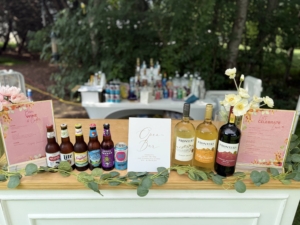
- Large format wine. 1.75L bottles or boxed wine are significantly more cost-effective per ounce than standard 750ml bottles.
- Beer and wine only at cocktail hour. Full bar at cocktail hour is where consumption spikes. A beer and wine only cocktail hour, with full bar opening at reception, is a smart and common cost-saving format.
- Shorten reception time. A 3.5-hour bar service versus 5 hours is a real cost difference. Consider a “last call” communication to your bar team 30 minutes before service ends, because it signals guests naturally without an awkward announcement.
- Skip the custom extras. Custom cocktail napkins, personalized drink stirs, branded cups, etc. They add up quickly and guests rarely remember them. Invest that money in the bar experience itself.
- Buy from a retailer that allows returns on unopened product. This is critical. Don’t ice everything down if you want return eligibility, wet wine and beer labels often void return policies.
The Bottom Line for 2026
Wedding bar costs are not going to decrease in 2026. Energy prices, supply chain fragmentation, and commodity costs are all pointing in one direction. The couples who come out ahead are the ones who:
- Work with vendors who build flexibility into their pricing and contracts
- Plan far enough in advance for those vendors to buy smart
- Make strategic menu decisions based on actual cost data — not generic advice
- Use real calculators to buy the right amount of alcohol
If you’re doing a DIY bar and want the actual numbers, I put together the DIY Wedding Bar Planning Guide — a detailed, downloadable resource with calculators built around your real event, not a one-size-fits-all estimate.
DIY Wedding Bar Resource
Stop guessing. Get the numbers right.
The DIY Wedding Bar Planning Guide includes detailed calculators built around your actual wedding… not a generic guest count average. Indoor vs. outdoor, full bar vs. beer and wine, shuttle or no shuttle — it all matters more than you think.
Get the Planning Guide →
And if you’re looking for a professional bar team in Maryland, DC, Delaware, or Virginia that will work with you throughout the planning process (not just show up and pour), reach out to Chesapeake Bartenders & Events. We’d love to help you build a bar your guests will be talking about — without the sticker shock.
Chesapeake Bartenders & Events is a professional mobile bartending and events company based on Maryland’s Eastern Shore, serving couples across the Mid-Atlantic since 2019.
Chesapeake Bartenders and Events Unveils New Bar and Bites Packages and Interactive Team Building Experiences for Corporate and Private Clients
FOR IMMEDIATE RELEASE
Chesapeake Bartenders and Events Unveils New Bar and Bites Packages and Interactive Team Building Experiences for Corporate and Private Clients
The Chesapeake Corporate Happy Hour Series brings themed happy hours, curated catering add ons, and hands on mixology experiences to offices across Washington DC and the DMV
STEVENSVILLE, MD, July 06, 2026: Chesapeake Bartenders and Events (CBE), the licensed mobile bar and event services company serving Maryland, Washington DC, Northern Virginia, and Delaware, today announced the launch of its Bar and Bites packages and Interactive Team Building experiences, a curated collection of corporate happy hours and hands on experiences designed for offices, headquarters, and hybrid teams.
The new offerings, branded as the Chesapeake Corporate Happy Hour Series, give corporate and private clients in and near DC, a menu of ready to book experiences that go far beyond the typical folding table of beer and wine. Every themed happy hour includes two hours of professional bar service, a mobile bar setup, mixers, garnishes, and a curated cocktail program, with the option to layer in snack bars and full catering spreads priced per person.
Themed Happy Hours With Local Personality
The series debuts with a lineup of curated themes, including:
Food add ons range from a DIY Popcorn Bar starting at just $3 per person to a full Cocktails and Conversations catering menu featuring charcuterie displays, shrimp cocktail platters, petite sandwiches, brunch bites, and dessert spreads. Coffee bar and craft mocktail bar services round out the beverage options for teams that want inclusive, alcohol free choices.
Team Building Where the Office Becomes the Entertainment
The interactive lineup turns coworkers into competitors and cocktail crafters, with sessions designed for groups of up to 25 guests and parallel groups available for larger teams:
Every team building session includes professional CBE bartenders, all materials and ingredients, full setup, and complete cleanup, and every guest takes home a mixology kit with shaker, muddler, strainer, and recipe cards.
CBE has delivered more than 1,000 events since 2019 and carries multimillion dollar general liability and umbrella coverage, with certificates of insurance available for any office building or private venue. The team is experienced in navigating Washington DC security badge coordination and tight urban load in windows, making the series a natural fit for downtown offices and corporate campuses.
The full lineup of packages, per person pricing, and the quote request form are available at https://www.chesapeakebartenders.com/corporate-event-bartenders/washington-dc/catering-and-bar-packages-for-corporate-events-dc/
About Chesapeake Bartenders and Events
Founded in 2019 and based in Stevensville, Maryland, Chesapeake Bartenders and Events is a licensed, insured mobile bar and catering company serving Maryland, Washington DC, Northern Virginia, and Delaware. The company provides TIPS certified bartenders, mobile bar rentals, curated catering, and event staffing for weddings, corporate events, and private celebrations.
Media Contact
Courtney Smith
Chesapeake Bartenders and Events
courtney@chesapeakebartenders.com
(443) 856-2928
How Inflation Affects Wedding Costs and What You Can Do About It (Strategies)
Grocery runs feel more expensive. Restaurant tabs have crept up. And if you are planning a wedding bar, you have probably already noticed that your rough budget from six months ago does not match today’s prices. Here is what is driving that shift, what you can buy and store right now to lock in savings, and what you simply cannot control no matter how well you plan.
The US economy has been all the talk in 2026, especially among wedding vendors and wedding industry professionals trying to manage the delicate balance of meeting client expectations, delivering a high quality experience and preventing costs from soaring. From wedding planners and venues to caterers and wedding bartenders, everyone is feeling the pressure to find the happy medium. As a mobile bar owner who has planned over 150 wedding bars, I try really hard not to increase pricing, but it is increasingly difficult to do so as inflation hits 3 main components of our business.
How Inflation Affects Wedding Costs – From An Food and Beverage Wedding Vendor’s Perspective
Unfortunately, this cost gets passed to couple’s because wedding vendors have to still pay taxes, pay for insurance, order in bulk, etc. As much as we don’t want to do that, we would not be in business without protecting ever-shrinking profit margins. I share this to set the stage for the inside scoop I’m laying out below. I’ve started 2 businesses during a recession, so I feel like I have a good pulse on how to pivot while maintaining quality.
Wedding Inflation – Couples Are Getting Creative To Budget Wisely
I share this because I own a micro venue on Kent Island in addition to Chesapeake Bartenders, and have more than a few tricks up my sleeve in regards to staying ahead of potential inflation, unexpected cost increases and last minute surprises that can de-rail a wedding budget quickly. Below, I have shared what we are doing from an operational standpoint in order to lock in costs now, how to have a beautiful wedding bar experience without overspending and which factors are simply out of our control. I hope this is helpful as you plan your wedding bar, beverage and mocktail stations! – Courtney
Jump to a Section – skip to what section most interest you
Where Your Wedding Bar Ingredients Come From (And Why It Matters)
Most of the ingredients that go into a wedding bar travel a long way before they reach your glass. Understanding where they come from helps you understand why prices shift and which items are most vulnerable to tariff changes, shipping disruptions, and weather events.
Sources: USDA Foreign Agricultural Service, California Citrus Mutual, World’s Top Exports. Data current as of May 2026.
What to Buy Right Now and Store – Cost Savings By Beating Future Inflation
The smartest thing a budget-conscious couple can do right now is purchase non-perishable bar supplies as soon as possible and store them properly. Here is the list we would give to any couple planning a bar six to twelve months out.
Coffee and Espresso
If espresso martinis or coffee cocktails are on your menu, buy your espresso or cold brew concentrate now. Whole beans are shelf stable for 12 to 18 months when stored in an airtight container away from light and heat. Coffee prices have risen more than 60% since 2020 and the trend is not reversing.
Sugar and Simple Syrups
White granulated sugar stored in a sealed airtight container lasts essentially indefinitely. Buy it now. Make your own simple syrups at home for a fraction of what pre-made syrups cost. The formula is easy: one part sugar, one part water, heat until dissolved, cool, and refrigerate. Add lavender, coffee, jalapeño, or raspberry to build any flavor you want. A batch costs less than $2 and tastes better than most store options.
Monin Syrups
Great news here: Monin’s US products are manufactured in Clearwater, Florida, which means less tariff exposure than most imported specialty syrups. Buy the flavors you need now anyway since they are shelf stable for up to 36 months unopened. Raspberry, cucumber, coffee, and coconut are our most requested at weddings. Vodka, club soda, and a Monin syrup is one of the easiest and most crowd-pleasing signature drinks you can serve.
Our DIY Wedding Bar Planning Guide includes a full signature drink planning section with Monin combinations that work for both cocktails and mocktail stations.
*if you purchase a Monin syrup from any of the on-page links, we might receive a very small commission.
Sodas and Mixers
Club soda, tonic water, ginger beer, and ginger ale are all shelf stable. The cheapest option per ounce is always the 2 liter bottle. If you want cans for the bar display, shop Walmart, Sam’s Club, or Costco for the lowest unit price. Store all sodas in a cool dark location. A basement is ideal. A garage in a Maryland winter or a Florida summer is not.
Tajin and Coarse Salt
If margaritas are on your menu, buy your Tajin and coarse rim salt now. Both are shelf stable for years and a small but satisfying box to check off early.
What You Cannot Lock In Early
I want to be honest with you here because setting false expectations does not help anyone.
Fresh citrus is the biggest variable you cannot control. Lemons and limes are perishable. You cannot buy them months out. And with limes sourced over 85% from Mexico and lemons facing tariff exposure from Argentina and South Africa, fresh citrus prices at the time of your wedding may look very different from what you see today.
Our recommendation: if you want to lock in costs as tightly as possible, design your signature drink around ingredients you can purchase early. A Monin-based cocktail with club soda and a shelf stable juice? Completely controllable. A fresh lemon sour with hand-squeezed juice? Beautiful, but price-dependent on the market at wedding time.
If fresh juice matters deeply to you, plan for it but leave budget room for price variance of 20 to 30% above what you see today.
Use Local and Seasonal to Your Advantage
One of the best ways to keep bar costs manageable is to build your garnish and herb plan around what is actually growing near you at the time of your wedding. Imported and out-of-season ingredients always cost more. Local and in-season options are often available at a fraction of the price (plus you help support local farmers and nurseries). Here are a few examples to get you thinking > We have a complete regional guide by month covering every part of the country if you want to look up your specific area.
STATE BY STATE SEASONAL INGREDIENTS LIST BY SEASON
Mid-Atlantic Couples (Maryland, Virginia, Delaware, Pennsylvania, New Jersey)
Florida Couples
Arizona Couples
Not on this list? Check our complete month-by-month seasonal guide for every US region to find what is growing near you at the time of your wedding.
Plant a Wedding Cocktail Garden
I did this for years and it is one of my favorite tips to share with DIY couples. Growing your own cocktail bar ingredients does two things at once: it keeps your costs low and gives you something grounding and joyful to tend during what can be a stressful planning season. Gardening is genuinely one of the best stress relievers there is, and watching herbs and berries grow for your own wedding bar is something special. And since granny hobbies are all the rage these days, why not take a cue from the victory gardens of the 1900’s that were so popular?
Mint, culinary lavender, rosemary, thyme, sage, marigolds, pansies, violas, strawberries, roses, and jalapeños are all completely achievable for a summer or fall wedding. Most can be started from small nursery plants. Some grow beautifully in raised beds (we love Vego Garden beds for this). Others thrive in containers on a deck or porch, which also has the bonus of keeping bunnies and other animals out of your harvest.
If you are short on outdoor space, an AeroGarden on a kitchen counter can grow herbs year round with zero garden experience required.
We have a full guide on building your own cocktail garden. In the meantime, check out our post on edible flowers for wedding bar cocktails and mocktails for ideas on what to plant first and what flowers make beautiful garnishes!
Lock In Your Bar Setup Costs Now Too
Bar aesthetics are not just a food and beverage budget line. The supplies that make your bar look beautiful including linens, risers, glassware, lighting, and signage are also subject to supply chain variability and shipping cost increases.
We have used the same core setup for years and it still photographs beautifully at every wedding. Two six foot tables, spandex linens in the color of your choice, eucalyptus garland, bar risers, and warm lighting. The whole thing is sourced from Amazon and costs a fraction of what rental companies charge for far less flexible setups.
You can steal our entire setup right here, Amazon links and all. Order the components now while pricing is predictable.
Your Next Step
If you are planning your own wedding bar and want a complete system for quantities, setup, staffing, and signature drinks without hiring a full bartending team, the DIY Wedding Bar Planning Guide gives you exactly that for $99.
Sixteen audio sections you can listen to on a commute. Five interactive calculators. Fifty-plus signature drink recipes. A real wedding case study with actual quantities and costs. Everything you need to walk into your wedding day knowing your bar is handled.
If you want to work through your specific situation one on one, the Full Custom Wedding Bar Planning Package gives you three calls with me personally to build your complete bar plan from scratch.
Either way, start planning now. The couples who build their bar plan early and buy what they can early are the ones who arrive at their wedding week without the stress of watching prices move on them.
Cheers,
Courtney
Founder, Chesapeake Bartenders and Events
*if you shop our Amazon affiliate links, we might earn a small commission – thanks for supporting our small business!
Orange Blossom Crush Cocktail – 2026 Newest Crush Recipe
There’s a New Orange Crush In Town – Move Over Classic Orange Crush!
If you live in Maryland and have ever been near a dock bar or Ocean City (and are 21 years old+), chances are, you are very familiar with the Orange Crush – it is hailed as Maryland’s official state cocktail. This delicious blend of orange vodka, triple sec, fresh squeezed orange juice and sprite goes down way too easy, because well…it is that good.
The Classic Orange Crush and almost as well known “Grapefruit Crush” are often requested at Maryland wedding bars, birthday parties, graduation parties and corporate events… and for good reason. Guests absolutely love them. The only problem? In the last 4 years, the cost of orange juice has skyrocketed.
Last year, we had a few wedding couples who really wanted orange crushes at the signature drink for their wedding bar menu, but they did not like the price tag that came along with the fresh juice. So I racked my mixologist brain to come up with something delicious, but without relying on the ever-increasing price of fresh squeezed OJ.
The result? The Orange Blossom Orange Crush – a delightful and vibrant blend of orange vodka, orange blossom simple syrup, triple sec, Sprite, Orange Fanta and a splash of pasteurized orange juice. It is quite different than the Classic Orange Crush, but in a fragrant, elevated yet subtle way. Orange blossom is delicate, floral, and subtly sweet essence that originates from bitter orange blossoms. Think subtle honey and flowery flavor profile. So it sort of turns a classic cocktail into an elevated, more complex taste profile, with a beautiful color (thanks to the Fanta).
Love Creamsicle flavors? You’ll want to try the Vanilla Orange Blossom Crush variation – simply swap out the orange vodka and replace with vanilla vodka. You won’t regret it!
And with rising costs on just about anything involving food and beverages in 2026, I’m sure many of you can appreciate a spin on a classic Maryland cocktail that also saves you some money. Having a big outdoor party this summer? Pre-batch this recipe in large containers.
Orange Blossom Crush Recipe
Follow These Simple Steps To Make An Orange Blossom Crush
1. Fill a cup with ice (ideally 12 ounce cup like they serve it at dock bars)
2. Add 1 ounce orange vodka
3. Add 1 ounce triple sec.
4. Add 1.5 ounce Fanta orange soda.
5. Add 1.5 ounce Sprite (or club soda)
6. Add .5 ounces Orange Blossom simple syrup
7. Add a splash of Orange Juice on top of the cocktail
8. Stir vigorously or if you want to do it like dock bar bartenders, take an empty cup of the same size and pour back and forth between 2 cups to mix everything evenly)
Please leave a comment and let us know if you tried this recipe! We would love to know if you like the Orange Blossom Crush as much as we do! We may earn a commission if you purchase items based on Amazon links on this site. The products we link to have been tested in our own recipes, so we feel comfortable sharing these recommendations with you.
Be sure to read other blog posts with creative drink recipes. Chesapeake Bartenders is proud to be the go-to event bartending company for weddings, events and private parties in Maryland, DC, Virginia and Delaware. For more information, please contact us!
How Can I Save Money on My Wedding Bar in 2026?
April 3, 2026 – by Courtney Smith
If you’ve started pricing out your wedding bar and had a minor panic attack, you’re not alone. Wedding bar costs have climbed steadily over the last several years, and in 2026, rising energy prices are accelerating that trend faster than most couples expect.
Here’s what’s actually happening: energy costs affect nearly every line item in your wedding budget — transportation, refrigeration, glassware production, mixer manufacturing, and wholesale distribution. As the global economy continues to fragment into competing supply chains, those costs are being passed downstream. To you. The couple planning a wedding in 2026.
I’m Courtney, owner of Chesapeake Bartenders & Events, a professional mobile bartending company serving Maryland, DC, Delaware, and Virginia. My company has bartended over 150 weddings in the last 5 years, so I’ve seen every attempt couples make to save on their bar…the ones that work, and the ones that quietly backfire.
Here is what actually moves the needle in 2026.
1. The Single Biggest Lever: Reduce Your Guest Count
If there is one thing I want every couple reading this to take away, it’s this: nothing reduces your wedding bar cost more dramatically than reducing your guest count. Nothing.
Food and beverage, including both alcoholic and non-alcoholic are the most elastic costs in your entire wedding budget. Every head you remove from the guest list removes a proportional cost from your bar. Glassware or cups, cocktail napkins, ice, mixers, garnishes, alcohol — all of it scales with headcount.
The CBE Difference
We don’t lock couples into a contract guest count and hold them to it no matter what. When your final headcount drops from 125 to 90, we adjust every flexible line item accordingly. Glassware, ice, garnishes, mixers, alcohol… all scaled down to reflect where you actually landed. That’s an instant cost reduction with zero negotiation required.
At CBE, we don’t lock our couples into a contract number and hold them to it no matter what. When you sign with us, we check in with you throughout the planning process. Once we receive your final guest count, we adjust every per-person line item accordingly. Guest count drops from 125 to 90? That’s an immediate, real reduction in your bar cost. We build that flexibility in intentionally because the planning process is rarely a straight line. Ask your wedding bar team if they can do the same.
This is especially relevant in 2026. If you’re on the fence about trimming your guest list, the math is simple: fewer guests = lower bar cost, lower catering cost, lower rental cost, lower venue cost. It compounds.
2. Stop Treating Your Vendors Like Amazon Prime
One of the least-talked-about ways to save money on your wedding bar is also one of the most actionable: be a proactive client.
We can pass significant cost savings along to couples who plan ahead, and here’s a recent, concrete example. Earlier this year, we waived travel and delivery fees for 2026 wedding couples who paid 50% of their balance early. Why? Because we saw what was happening with oil prices and supply chain disruptions in the Middle East, purchased a large wholesale order of supplies (Tossware, cocktail napkins, straws, and more) at a locked-in cost, and could pass those savings directly to clients who participated.
2026 Cost Watch
Rising energy prices are directly affecting the cost of mixers, glassware production, refrigeration, and wholesale distribution in 2026. Last-minute orders mean retail prices… and retail prices mean your bar bill goes up. Every week of advanced planning has real dollar value right now.
That opportunity only existed because of advance planning. Couples who wait until the last minute — changing their menu, adding guests, requesting specialty items two weeks out, etc., eliminates our ability to buy wholesale. When we’re placing a last-minute order, we’re paying retail. That cost gets passed to you.
How do you avoid this? Fill out the questionnaires your wedding vendors send you. Respond to check-in emails. Communicate. We send planning questionnaires at signing and throughout the process specifically so we can plan well in advance, catch potential cost issues early, and build in pivoting room when something unexpected changes.
Wedding vendors in 2026 are not sitting behind a desk waiting for your call. We are managing insurance, coordinating staff, doing site visits, running payroll, handling marketing, generating proposals, and setting up and breaking down multiple events per week. When you go into high-maintenance mode two weeks before your wedding with last-minute changes, that urgency has a cost. Plan ahead, be a great client, and you will have less stress and a lower bill.
3. Understand What “Beer and Wine Only” Actually Saves (And What It Doesn’t)
Yes, offering beer and wine only instead of a full open bar is a real cost-saving strategy. Spirits cost more per ounce, and once you add mixers, juices, and garnishes for a full cocktail menu, the costs add up quickly.
But here’s what I get asked constantly: “If we do beer, wine, and one signature drink, will that save us money?”
The honest answer is: sometimes. Here’s why.
The real cost of your wedding bar is built around per-person consumption of everything, not just alcohol. If your signature drink includes fresh juice, simple syrup, cherries, and specialty garnishes, the ingredient cost starts to look a lot like a full bar. A mixer is a mixer. Whether it’s sprite, simple syrup, or margarita mix, the cost is calculated by ounce consumed.
And then there’s the follow-up I always ask: “Half my guests don’t drink alcohol, so my bar cost should be lower, right?”
My response: Do those guests plan to drink water, lemonade, soda, or mocktails? If yes, your non-alcoholic beverage cost does not decrease, it can actually increase. I’ve bartended weddings where the non-drinking guests consumed enormous quantities of soda, all while using cups, napkins, and ice. Non-alcoholic beverages are not free. Soda is not as cheap as you think.
One cost-effective solution for non-drinking guests: instead of routing everyone through the bar for sodas, set up a beautiful hydration station. Think spa water — a large dispenser with plain water, one with citrus and mint, one with berries. Use 9 oz plastic cups and plain cocktail napkins. You can add lemonade or iced tea. This keeps non-drinkers happy without running up your bar tab.
Pro Tip from CBE
Our default cup size is 9 oz. Guests who receive larger cups unconsciously consume more… which means more ice, more mixer, more garnish on every single drink. That one swap alone can reduce your per-person consumption noticeably across 100+ guests.
4. The Orange Crush Problem — and What It Taught Us About Pivoting
Maryland couples love the Orange Crush. It’s our state’s signature cocktail. And for years, it’s also been one of the first things I walk couples back from when they’re working with a tight budget.
Why? Fresh squeezed orange juice (the key ingredient in a proper Orange Crush), has increased dramatically in price over the last five years. Ordering it in quantity for a wedding bar can mean hundreds of dollars in juice alone (yes, even if you purchase it at Sam’s Club)
Rather than just saying “don’t do it,” we built solutions:
The lesson here goes beyond orange juice. In 2026, with energy and commodity costs rising, the vendors who’ve learned to pivot quickly, without sacrificing quality…are the ones who can protect your budget. That’s only possible when there’s enough lead time to find creative alternatives. Which brings us back to point two: plan ahead!
5. Two-Liter Bottles Are Your Secret Weapon
Pinterest lied to you.
Those stunning wedding bar photos with individual glass bottles of Fever Tree tonic and hand-labeled artisan mixers? They were taken before the reception started, before anyone touched anything, and before 150 guests consumed 400 drinks over four hours.
The most underrated cost-saving move in wedding bar planning is also the least glamorous: 2-liter bottles.
Swapping premium canned or bottled mixers for 2-liter bottles of club soda, tonic, ginger ale, Coke, and Diet Coke saves you an enormous amount per ounce, often 2-3x less expensive than individual cans. Do cans look nicer? Yes. Is the difference worth it when it adds hundreds of dollars to your bar cost? Almost never.
Use the money you save on mixers to invest somewhere guests will actually notice! Perhaps a prettier bar setup, a signature cocktail display, or better alcohol.
6. Sangria: The Underrated Budget Hero
If you’re looking for one menu addition that photographs beautifully, delights every age group, and actually saves you money, sangria.
Pre-batched sangria is one of my favorite recommendations for couples working with a tighter budget. It speeds up bar service (no individual cocktail construction), it’s made from affordable ingredients (approachable wine, triple sec, simple syrup, fresh or frozen fruit), and it looks stunning in a large glass dispenser.
White sangria, classic red sangria, rosé sangria, champagne sangria, there are endless variations. Whatever your color palette or theme, there’s a sangria that fits! It consistently earns compliments at the bar and is one of the most cost-effective offerings we serve.
7. Don’t Overbuy Alcohol
This sounds obvious. It is not obvious.
The most common expensive mistake I see at DIY weddings? Way too much alcohol. I understand the appeal of walking into Total Wine or Costco with a wedding to plan is genuinely exciting. But consistently, we arrive at wedding setups for 100 guests to find enough alcohol for 300.
Real Talk: From the Bar
We showed up to a 100-guest wedding once with enough alcohol stacked against the wall for 300 people. Moving heavy cases of liquor out of frame before photos… is not how anyone wants to spend the first hour of a reception setup. Don’t overbuy.
This creates real problems: nowhere to store it, heavy boxes that need to be moved away from the bar area before photos, and zero return on the investment. Extra open alcohol often can’t be returned. It sits in your garage or basement.
If you want to not overbuy, you need a real calculator. Not the generic ones on The Knot that spit out a flat number based on guest count. Your alcohol quantities depend on: indoor vs. outdoor (heat increases consumption), length of service, whether there’s a wedding shuttle (people drink more when they’re not driving), your guest demographics, your cocktail menu, and your bar format and so many variables couples don’t even know about.
I built the DIY Wedding Bar Planning Guide specifically to address this. It goes well beyond what free calculators offer, with detailed, customizable calculators built around your actual wedding variables, not a generic average.
8. Small Decisions That Add Up Fast
A few more specifics that quietly drive up bar costs:
The Bottom Line for 2026
Wedding bar costs are not going to decrease in 2026. Energy prices, supply chain fragmentation, and commodity costs are all pointing in one direction. The couples who come out ahead are the ones who:
If you’re doing a DIY bar and want the actual numbers, I put together the DIY Wedding Bar Planning Guide — a detailed, downloadable resource with calculators built around your real event, not a one-size-fits-all estimate.
DIY Wedding Bar Resource
Stop guessing. Get the numbers right.
The DIY Wedding Bar Planning Guide includes detailed calculators built around your actual wedding… not a generic guest count average. Indoor vs. outdoor, full bar vs. beer and wine, shuttle or no shuttle — it all matters more than you think.
Get the Planning Guide →
And if you’re looking for a professional bar team in Maryland, DC, Delaware, or Virginia that will work with you throughout the planning process (not just show up and pour), reach out to Chesapeake Bartenders & Events. We’d love to help you build a bar your guests will be talking about — without the sticker shock.
Chesapeake Bartenders & Events is a professional mobile bartending and events company based on Maryland’s Eastern Shore, serving couples across the Mid-Atlantic since 2019.